
How to Track Digital Assets for Secure, Real-Time Oversight

Over 80 percent of American investors worry about the risks of digital asset security each year. Securing your online investments has become a major concern as platforms grow more sophisticated and threats evolve. Understanding how to set up secure access, connect wallets, and monitor compliance gives you the confidence to protect your American digital assets at every step while making the most of new financial opportunities.
Table of Contents
- Step 1: Set Up Secure Access to Your Digital Asset Platform
- Step 2: Connect Wallets and Asset-Backed Token Accounts
- Step 3: Monitor Blockchain Data and Live Performance Metrics
- Step 4: Verify Proof of Reserve and Regulatory Compliance
- Step 5: Audit Asset Holdings and Download Transparent Reports
Quick Summary
| Key Message | Explanation |
|---|---|
| 1. Implement Multifactor Authentication | Use multifactor authentication to add a second verification layer, reducing unauthorized access risks. |
| 2. Choose Compatible Wallets for Tokens | Select wallets that support required token architecture for seamless integration with digital asset platforms. |
| 3. Monitor Asset Performance Regularly | Use advanced monitoring tools to track transaction volumes and price movements, maintaining informed investment decisions. |
| 4. Verify Compliance and Proof of Reserve | Regularly check proof of reserve and ensure adherence to compliance standards to validate asset legitimacy. |
| 5. Maintain Detailed Asset Audits | Download and review reporting on asset valuations and transaction histories to ensure transparency and accuracy. |
Step 1: Set Up Secure Access to Your Digital Asset Platform
Securing access to your digital asset platform requires strategic planning and precise implementation. You will establish robust authentication protocols that protect your valuable digital investments from unauthorized access.
Begin by selecting a platform with comprehensive security controls and authorization mechanisms. Your first action involves creating a strong user account with multifactor authentication. This means using more than just a password your username and a second verification method like a time-based authentication app or hardware security key. These additional layers dramatically reduce the risk of unauthorized entry.
The authentication process should incorporate advanced security features such as encryption protocols and secure login pathways. Best practices recommend implementing granular user permissions that restrict access based on specific user roles and responsibilities. For instance financial administrators might have broader access compared to standard account holders.
Professional Tip: Always use a dedicated device for accessing your digital asset platform and avoid logging in through public networks or shared computers to minimize potential security vulnerabilities.
Here is a comparison of key security features and their impact on digital asset platforms:
| Security Feature | Functionality | Business Impact |
|---|---|---|
| Multifactor Authentication | Requires multiple verification steps | Dramatically reduces unauthorized access risk |
| Encryption Protocols | Protects data transmission and storage | Safeguards sensitive asset information |
| Granular User Permissions | Limits user actions by role | Minimizes internal fraud and error |
| Dedicated Device Access | Prevents logins outside authorized hardware | Enhances account security |
Step 2: Connect Wallets and Asset-Backed Token Accounts
Connecting your digital wallets to asset-backed token accounts is a critical step in managing your digital investment portfolio. You will learn how to seamlessly link your preferred cryptocurrency wallet with platforms that support verified asset-backed tokens.

Start by selecting a compatible wallet that supports the specific token architecture designed for mobilizing alternative assets. This process involves verifying your wallet’s compatibility with the platform’s security protocols and token standards. Most platforms require you to have an ERC-20 compatible wallet that supports advanced authentication mechanisms. Look for wallets that offer robust encryption and support for multiple blockchain networks to ensure maximum flexibility.
The connection process typically involves generating a unique wallet address and completing a verification procedure that confirms your ownership and authorization. Pay close attention to the platform’s specific requirements for wallet connection which may include providing proof of identity document uploads and completing two factor authentication steps. Some platforms might require you to maintain a minimum balance or meet specific compliance criteria before full wallet integration.
Professional Tip: Always screenshot and securely store your wallet connection confirmation and keep your private keys in a separate offline storage location to prevent potential unauthorized access.
Step 3: Monitor Blockchain Data and Live Performance Metrics
Tracking the real-time performance of your digital assets requires sophisticated monitoring techniques that provide comprehensive insights into your investment portfolio. You will learn how to effectively analyze blockchain transactions and evaluate the dynamic metrics that impact your asset valuation.
Begin by utilizing platforms that offer advanced anonymous yet accountable transaction monitoring systems. These sophisticated tracking tools enable you to observe blockchain activities while maintaining robust privacy protections. Look for monitoring interfaces that provide granular details such as transaction volumes, price movements, liquidity indicators, and historical performance trends. Cutting-edge cryptographic techniques now allow for enhanced security and detailed performance analysis without compromising your personal information.
Establish a routine for regular performance reviews by setting up automated alerts and customizable dashboards. Your monitoring strategy should include tracking key metrics like total value locked, trading volumes, price volatility, and comparative performance against benchmark assets. Many professional platforms offer real-time graphical representations and downloadable reports that help you make informed decisions about your digital asset portfolio.
Professional Tip: Create a dedicated spreadsheet or tracking document where you log your daily observations and compare them against your initial investment goals to maintain a disciplined approach to digital asset management.
Step 4: Verify Proof of Reserve and Regulatory Compliance
Ensuring the legitimacy and financial integrity of your digital assets requires a systematic approach to verifying proof of reserve and understanding regulatory compliance standards. You will learn how to thoroughly validate the transparency and backing of your asset-backed tokens.
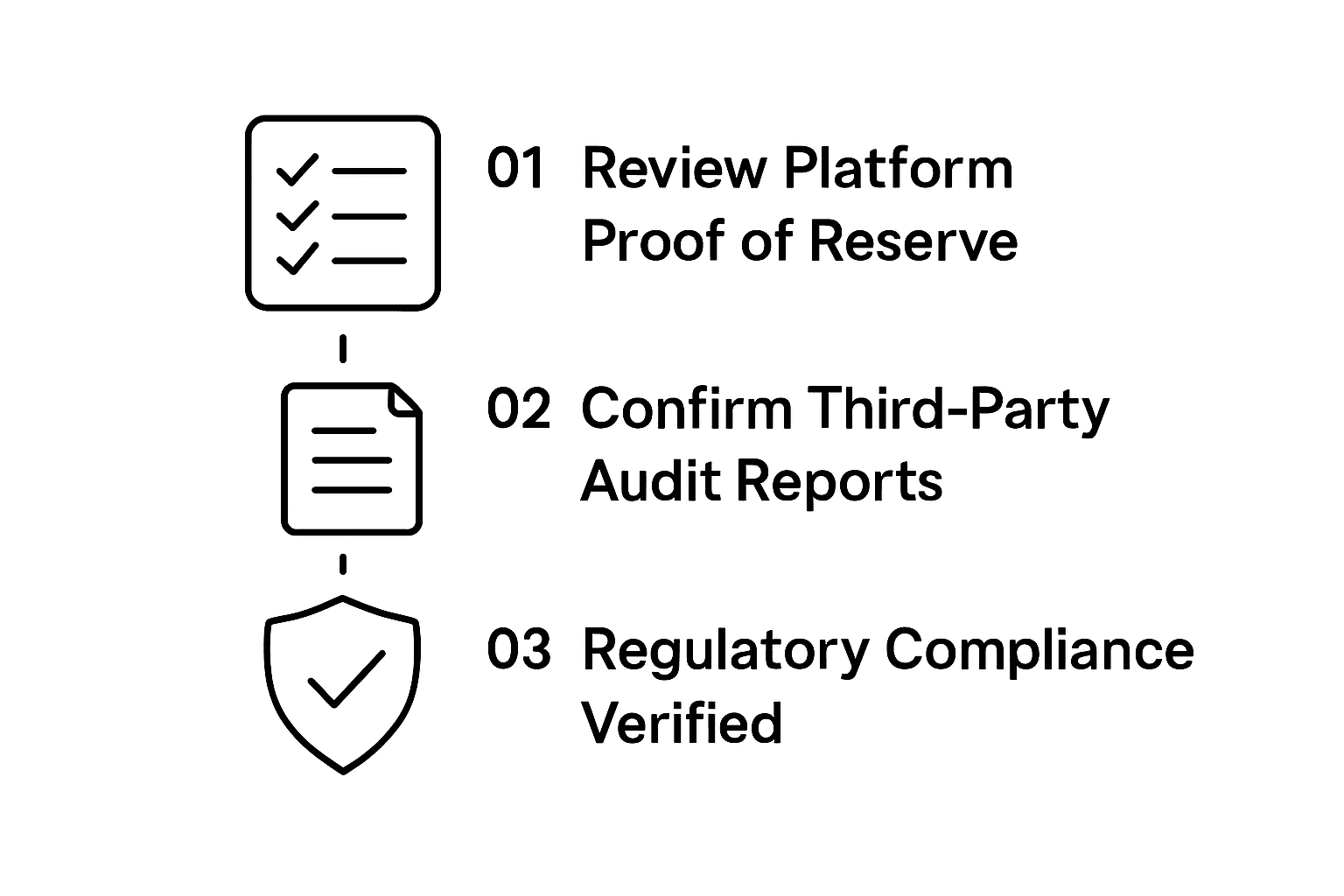
Start by examining the platform’s comprehensive security and compliance documentation. This process involves carefully reviewing the platform’s proof of reserve reports which demonstrate that the digital assets are fully backed by verifiable physical reserves. Utilize platform guidelines that outline specific compliance mechanisms designed to validate asset authenticity and maintain regulatory standards. Look for platforms that provide detailed third-party audit reports transparent reserve calculations and real-time verification mechanisms.
Carry out a detailed review of the regulatory compliance framework by checking the platform’s registration status with relevant financial authorities. Pay close attention to documentation that shows adherence to Know Your Customer (KYC) anti money laundering regulations and international financial reporting standards. Verify that the platform provides clear mechanisms for asset redemption transparency in reserve calculations and comprehensive risk management protocols.
Professional Tip: Create a dedicated compliance checklist that includes verification dates audit report references and key regulatory compliance markers to systematically track and validate your digital asset platform’s legitimacy.
Step 5: Audit Asset Holdings and Download Transparent Reports
Auditing your digital asset holdings requires a systematic approach to ensure complete transparency and accurate financial tracking. You will learn how to effectively review and document your asset portfolio with precision and confidence.
Begin by leveraging advanced wallet architectures that enable secure asset tracking. These sophisticated systems provide granular insights into your asset composition by generating comprehensive audit trails that detail every transaction and asset movement. Utilize associated token account management techniques to categorize and organize your digital assets systematically. Focus on collecting detailed reports that showcase total asset value historical performance individual token allocations and real-time valuation metrics.
Implement a consistent reporting schedule where you download and review platform generated transparency reports. Verify that these documents include critical information such as reserve ratios asset backing percentages current market valuations and comprehensive transaction histories. Cross reference these reports with your personal transaction logs to ensure absolute accuracy and detect any potential discrepancies in your digital asset portfolio.
Professional Tip: Create a dedicated digital folder with timestamped audit reports and maintain a quarterly reconciliation process to track your assets performance and maintain meticulous financial records.
This summary highlights important differences between auditing and compliance for digital asset platforms:
| Area | Audit Focus | Compliance Focus |
|---|---|---|
| Main Objective | Verifying asset holdings | Meeting legal and regulatory standards |
| Key Documents | Asset reports and transaction logs | Proof of reserve and audit certificates |
| Review Frequency | Quarterly or scheduled | Ongoing or during regulatory events |
| Proof Required | Transaction accuracy and value | Evidence of KYC and AML adherence |
Secure Your Digital Asset Journey with Trusted Gold-Backed Tokens
Tracking digital assets with guaranteed transparency and regulatory compliance is no easy feat. The article highlights challenges like ensuring proof of reserve, maintaining secure wallet connections, and real-time monitoring of blockchain data. These critical steps demand a platform that not only offers robust security through multifactor authentication and granular user permissions but also delivers ongoing compliance and transparent audit reports.
At UK Financial Ltd, we solve these challenges by providing investors with access to gold and silver-backed cryptocurrency tokens that are fully backed by verifiable physical reserves. Our platform features real-time blockchain asset tracking, detailed proof of reserve reports, and live token performance metrics that empower you to confidently manage your portfolio. We emphasize both security and regulatory compliance so you can focus on growth and wealth preservation with peace of mind.
Take control of your digital assets today and experience the difference of a platform designed for secure, transparent, and compliant investment exposure. Visit UK Financial Ltd now to explore our portfolio, including the flagship Maya Preferred PRA, and start tracking your asset-backed tokens with real-time oversight.

Discover how to turn digital asset risks into opportunities with trusted gold-backed tokens at UK Financial Ltd and secure your financial future with confidence.
Frequently Asked Questions
How can I set up secure access to my digital asset platform?
To set up secure access, begin by creating a strong user account with multifactor authentication. Implement advanced security features such as encryption protocols and granular user permissions to ensure only authorized users can access sensitive information.
What steps should I take to connect my digital wallets to asset-backed token accounts?
Start by selecting a compatible wallet that supports the specific token architecture required by your platform. Generate a unique wallet address and follow the verification procedures, including identity document uploads and two-factor authentication, to ensure a secure connection.
How can I monitor blockchain data and live performance metrics for my digital assets?
Utilize advanced monitoring tools to track real-time performance metrics like transaction volumes and price movements. Set up automated alerts and customizable dashboards to help you maintain oversight of your digital assets and make informed decisions effectively.
What should I check to verify proof of reserve and ensure regulatory compliance?
Examine the platform’s proof of reserve reports to confirm that digital assets are fully backed by verifiable reserves. Review the platform’s registration status with financial authorities and ensure compliance with Know Your Customer (KYC) and anti-money laundering regulations.
How do I audit my digital asset holdings for accuracy and transparency?
Leverage advanced wallet architectures to generate comprehensive audit trails of your asset movements. Implement a consistent schedule for downloading platform-generated reports, and cross-reference them with your records to maintain accurate tracking of your digital asset portfolio.