
Digital Asset Transparency: Why It Matters Now

Most American investors now expect more transparency from digital assets than ever before. With the market value of digital assets exceeding two trillion dollars globally, understanding their trustworthiness has become a top priority. This shift means every American investor needs to know how real-time disclosures and independent audits help separate reliable platforms from risky ones. Get clear, practical insight into what true transparency looks like across today’s digital asset ecosystem.
Table of Contents
- Defining Digital Asset Transparency Today
- Types of Digital Assets and Transparency Levels
- How Proof of Reserves and Blockchain Enable Trust
- Regulatory Compliance and Reporting Standards
- Risks of Opaqueness and Investor Rights
Key Takeaways
| Point | Details |
|---|---|
| Importance of Transparency | Digital asset transparency is essential for building investor trust and facilitating informed decision-making. |
| Role of Blockchain | Blockchain technology enhances transparency by allowing real-time verification of asset movements and holdings. |
| Category Characteristics | Different types of digital assets demonstrate varying levels of transparency, impacting investor confidence. |
| Regulatory Compliance | Adhering to regulatory frameworks is crucial for digital asset platforms to ensure investor protections and market integrity. |
Defining Digital Asset Transparency Today
Digital asset transparency represents a fundamental shift in financial infrastructure, transforming how investors perceive and interact with digital investments. At its core, transparency means providing clear, verifiable information about asset composition, ownership, and underlying value. Digital assets require unprecedented levels of openness that go beyond traditional financial reporting standards.
The modern definition of digital asset transparency encompasses several critical dimensions. First, it involves real-time disclosure of asset reserves, transaction histories, and verification mechanisms. Investors now demand granular insights into how digital assets are managed, tracked, and secured. Blockchain technology has become a primary enabler of this transparency, creating immutable, publicly accessible ledgers that allow instant verification of asset movements and holdings.
Moreover, transparency is not just a technical requirement but a trust-building mechanism. As highlighted in recent business research, organizations that prioritize transparent operations gain significant competitive advantages. This means providing comprehensive proof of reserves, detailed audit trails, and clear communication about asset backing, risk management strategies, and governance protocols.
Pro Investor Insight: Develop a systematic approach to evaluating digital asset transparency by creating a personal checklist that includes verifying proof of reserves, understanding asset backing mechanisms, and reviewing independent audit reports before making any investment decisions.
Types of Digital Assets and Transparency Levels
Digital assets represent a complex ecosystem with varying transparency characteristics that significantly impact investor confidence and market dynamics. Comprehensive research from academic sources reveals multiple categories of digital assets, each presenting unique transparency challenges and opportunities for investors and regulatory bodies.
Traditionally, digital assets can be categorized into several primary types: cryptocurrencies, tokenized real-world assets, utility tokens, security tokens, and asset-backed tokens. Each category demonstrates distinct levels of transparency. Cryptocurrencies like Bitcoin offer pseudonymous blockchain transparency, where transaction details are publicly visible but participant identities remain obscured. In contrast, asset-backed tokens present more structured transparency frameworks, often requiring rigorous verification of underlying asset reserves and periodic audit reporting.

The transparency spectrum ranges from highly opaque to completely transparent digital assets. Utility tokens typically provide moderate transparency, showing transaction volumes and token distribution. Security tokens, regulated by financial authorities, demand higher transparency standards, including comprehensive disclosure of ownership, transfer mechanisms, and compliance documentation. Asset-backed tokens represent the pinnacle of transparency, where each token’s value is directly linked to verifiable physical or financial assets, enabling real-time tracking and validation.
The following table provides a high-level comparison of transparency features across major digital asset types:
| Asset Type | Typical Transparency Level | Key Transparency Feature | Regulatory Oversight |
|---|---|---|---|
| Cryptocurrency | Moderate | Public blockchain ledger | Limited |
| Utility Token | Moderate | Transaction and distribution metrics | Varies by jurisdiction |
| Security Token | High | Full ownership and compliance reports | Strong, financial laws |
| Asset-Backed Token | Very High | Verifiable asset reserves and audits | Increasing regulations |
| Tokenized Real-World Asset | Varies | Reserve disclosures and legal backing | Growing, evolving rules |
Pro Investigator Tip: Develop a systematic transparency assessment framework that evaluates digital assets across multiple dimensions, including blockchain verifiability, reserve documentation, regulatory compliance, and independent audit frequency before making investment decisions.
How Proof of Reserves and Blockchain Enable Trust
Blockchain technology represents a revolutionary approach to establishing trust in digital asset ecosystems. Legal research examining digital asset mechanisms reveals how proof of reserves and decentralized ledger systems fundamentally transform investor confidence by creating unprecedented transparency and verifiability.
The core blockchain infrastructure enables independent transaction verification, allowing multiple participants to audit and confirm asset movements without relying on centralized intermediaries. This distributed verification process creates a multilayered trust mechanism where every transaction is permanently recorded, cryptographically secured, and accessible for public scrutiny. Proof of reserves extends this concept by requiring digital asset platforms to demonstrate they possess sufficient backing assets to cover all issued tokens, effectively eliminating the risk of fractional reserve practices.
The trust-building mechanisms of blockchain and proof of reserves operate through several critical components. First, cryptographic signatures ensure that each transaction can be traced and verified without revealing sensitive personal information. Second, the immutable nature of blockchain records means that once a transaction is confirmed, it cannot be altered or deleted, creating a permanent and transparent audit trail. Third, smart contract technologies enable automatic verification of asset reserves, providing real-time insights into the financial health and backing of digital asset platforms.
Here is an overview of how key blockchain and proof of reserves features contribute to investor trust:
| Feature | Function | Impact on Investor Trust |
|---|---|---|
| Immutable Blockchain | Prevents data alteration or deletion | Ensures record reliability |
| Cryptographic Signatures | Verifies transaction authenticity | Increases confidence in validity |
| Proof of Reserves | Shows assets fully backed | Reduces risk of insolvency |
| Smart Contracts | Automates verification processes | Enables real-time trustless auditing |
Pro Investigator Tip: Develop a systematic verification protocol by regularly checking blockchain explorer platforms, reviewing proof of reserve documentation, and cross-referencing asset holdings with independent audit reports to ensure the integrity of your digital asset investments.
Regulatory Compliance and Reporting Standards
Regulatory frameworks for digital assets are rapidly evolving, creating a complex landscape of legal requirements and reporting standards. European legal principles demonstrate the critical importance of establishing comprehensive guidelines that protect investors while facilitating innovative financial technologies.
Financial research highlights the necessity of standardized reporting mechanisms across digital asset platforms. The emerging regulatory approach focuses on several key dimensions: comprehensive financial disclosure, robust anti-money laundering protocols, customer identity verification, and transparent asset tracking. Digital asset platforms must now implement sophisticated compliance systems that go beyond traditional financial reporting, incorporating real-time monitoring, cryptographic verification, and comprehensive audit trails.
The regulatory compliance landscape is characterized by three primary pillars. First, Know Your Customer (KYC) requirements demand rigorous investor identification processes. Second, Anti-Money Laundering (AML) regulations necessitate continuous transaction monitoring and suspicious activity reporting. Third, asset reporting standards require platforms to provide detailed documentation about token reserves, underlying asset values, and transaction histories. These frameworks aim to mitigate risks, prevent financial fraud, and establish a trustworthy ecosystem for digital asset investments.
Pro Investigator Tip: Develop a personal compliance checklist that evaluates digital asset platforms based on their regulatory adherence, examining their KYC processes, AML protocols, reporting transparency, and third-party audit documentation before making any investment decisions.
Risks of Opaqueness and Investor Rights
Digital asset opacity represents a significant threat to investor protections and market integrity. Business research reveals how lack of transparency undermines fundamental investor trust, creating an environment where financial risks can proliferate unchecked.
Academic studies examining digital asset ecosystems highlight multiple critical risks associated with opaque investment platforms. These risks include potential market manipulation, hidden counterparty exposures, undisclosed financial vulnerabilities, and the absence of clear redemption mechanisms. Investors confronting opaque digital asset environments face substantial challenges in assessing true asset values, understanding underlying risks, and protecting their financial interests.
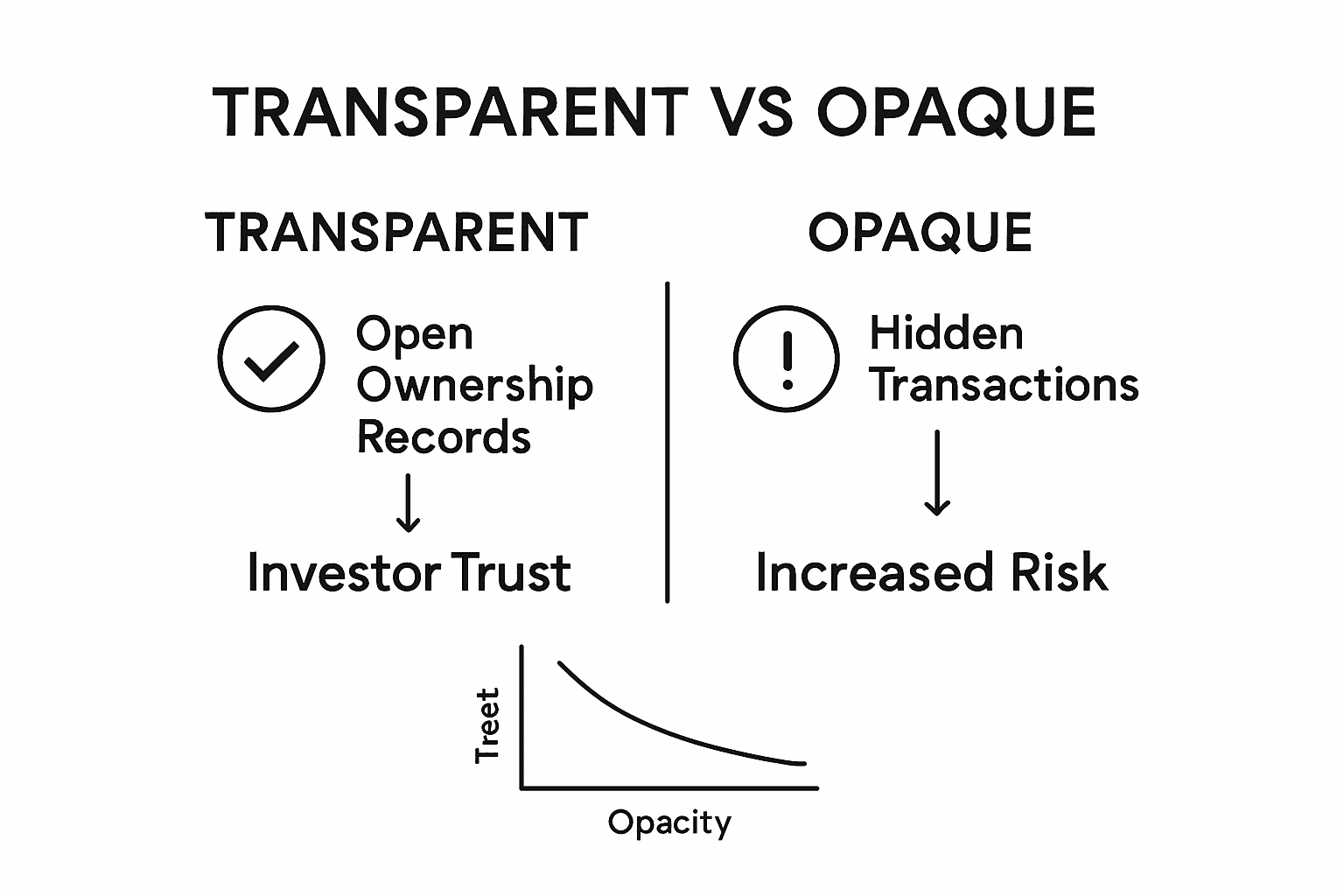
The landscape of investor rights in digital asset markets is fundamentally shaped by transparency requirements. Key protections include the right to comprehensive financial disclosure, verified asset backing, clear redemption protocols, and transparent fee structures. Opaque platforms that obscure critical information effectively strip investors of their ability to make informed decisions, potentially exposing them to unquantifiable financial risks. Sophisticated investors increasingly demand granular insights into asset composition, transaction histories, and platform governance to mitigate potential losses.
Pro Investigator Tip: Develop a strict due diligence protocol that mandates complete transparency documentation from any digital asset platform, including detailed reserve reports, independent audit statements, and comprehensive risk disclosures before committing any investment capital.
Unlock True Transparency with Asset-Backed Digital Investments
The article highlights the critical challenge investors face today: navigating digital assets without clear proof of reserves and trustworthy transparency. Concepts like blockchain verifiability, immutable audit trails, and regulatory compliance are no longer optional. If you are seeking secure exposure to digital tokens fully backed by tangible assets and want to avoid the risks of opacity and unregulated platforms this is your moment to act. UK Financial Ltd offers gold-backed and silver-backed cryptocurrency tokens that prioritize real-time transparency and comprehensive proof of reserves to give investors confidence in every transaction.

Explore our portfolio including the flagship Maya Preferred PRA and asset-secured tokens designed for both retail and institutional investors. By choosing UK Financial Ltd you gain access to live blockchain tracking, independent audit reports, and a compliance framework built around your security. Discover how transparency transforms asset trustworthiness by visiting UK Financial Ltd now and start safeguarding your investments with fully accountable digital assets.
Frequently Asked Questions
What is digital asset transparency?
Digital asset transparency refers to the clarity and openness regarding asset composition, ownership, and underlying value of digital investments, facilitated by technologies like blockchain.
Why is transparency important in digital assets?
Transparency is essential as it builds trust among investors, mitigates risks of fraud, and ensures that assets are backed by verifiable reserves, which is crucial for informed investment decisions.
How does blockchain technology contribute to digital asset transparency?
Blockchain technology enables real-time disclosure and independent verification of transactions through immutable and publicly accessible ledgers, enhancing trust in digital asset ecosystems.
What are the risks associated with opaque digital asset platforms?
Opaque digital asset platforms can lead to potential market manipulation, hidden vulnerabilities, and challenges in assessing true asset values, ultimately threatening investor protection and market integrity.
Recommended
- UK Financial Ltd – Gold-Backed Cryptocurrency Portfolio
- UK Financial Ltd Sets Official 30-Day Conversion Deadline for Three Exchange-Listed Tokens Ahead of Regulated Upgrade
- News | UK Financial Ltd
- UK Financial Ltd Confirms Official Corporate Structure of the Maya Preferred Project and Its Dual-Class Token System
- Understanding the FTC Safeguards Rule – CinchOps, Inc.